
What Are Demurrage and Detention (D&D)?

The cargo arrived, and days later an unexpected invoice shows up: demurrage, detention. The names sound alike, but they happen at different points and are billed by different parties. Understand the difference and most of these charges are avoidable.
This guide helps shippers understand D&D (demurrage and detention), why it happens, and how to reduce it.
What Are Demurrage and Detention?
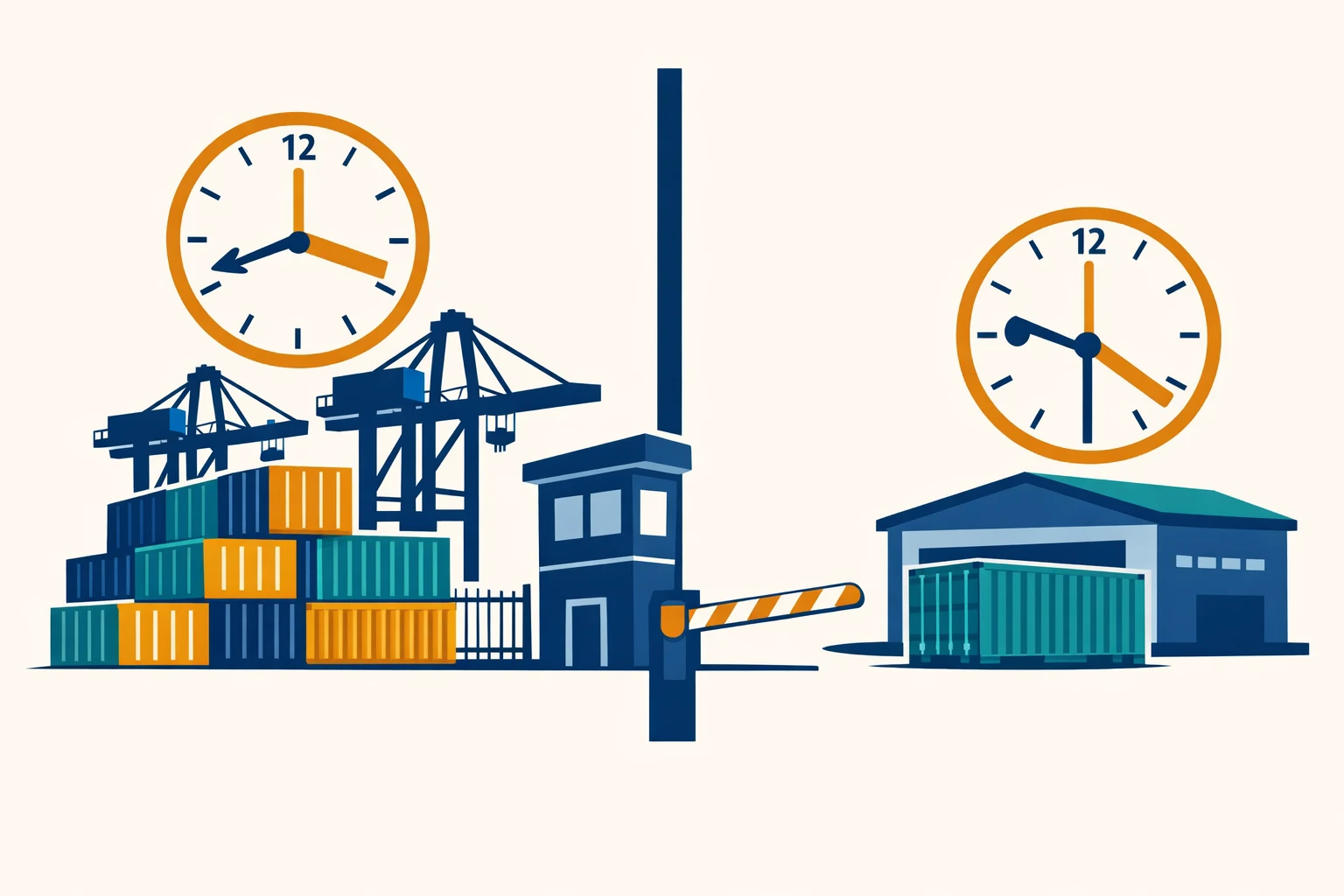
Demurrage is charged when a container stays inside the terminal (CY) beyond its free time; detention is charged when a container is taken outside the terminal and not returned within the allowed time. The key test is whether the container is currently inside or outside the terminal.
Demurrage vs Detention
| Demurrage | Detention | |
|---|---|---|
| Location | Inside the terminal / CY | Outside the terminal (your yard, etc.) |
| Trigger | Import: container not picked up from CY | Container not returned on time after pickup |
| Charged by | Terminal / carrier | Carrier (equipment rental) |
| Free time | Relatively shorter | Relatively longer |
In plain terms: demurrage means "you didn't pull the container out of the port fast enough," detention means "you didn't return the container you pulled out on time."
Storage Is Different Again
A third term often confused with these is storage. Storage is a charge for cargo occupying terminal space, billed by the terminal operator. If demurrage is a charge on the container equipment, storage is a charge on the terminal space. In practice the two can apply at once.
Why D&D Happens
- Document delays: a late B/L or customs paperwork holds up pickup
- Customs holds: inspection or tax issues delay release
- Trucking or warehouse bottlenecks: no vehicle or unloading space to move the container
- Free-time miscalculation: planning against the wrong free-time window
- Poor visibility: not knowing the container's current stage, so responses come late
How to Reduce D&D
- Negotiate free time upfront: secure enough free days with the carrier or forwarder at booking
- Prepare documents early: finalize the B/L and customs paperwork before arrival
- Plan pickup before arrival: book trucking, warehouse, and customs against the ETA
- Track in real time: watch container status to catch free-time deadlines early
- Return empties fast: return the empty container promptly after unloading
Free-time management and visibility are the core. A good forwarder manages ETA and free time together, moving before D&D can accrue.
This guide is for general information. Free time, rates, and billing rules vary by carrier, terminal, and contract. Confirm the conditions at booking.
Frequently asked questions
What is the difference between demurrage and detention?
Demurrage applies when a container stays inside the terminal (CY) beyond its free time; detention applies when a container is taken outside the terminal and not returned on time. The test is whether the container is inside or outside the terminal.
Who charges demurrage and detention?
Demurrage is charged by the terminal operator or carrier; detention is charged by the carrier as an equipment-rental fee. On imports the consignee (shipper) usually pays, though contract terms can change liability.
How does storage differ from demurrage?
Storage is a charge for cargo occupying terminal space, billed by the terminal operator. Demurrage is a charge on the container equipment, while storage is a charge on the terminal space, and the two can apply at the same time.
How can I reduce D&D charges?
Negotiate enough free time at booking, prepare the B/L and customs documents before arrival, and book trucking, warehouse, and customs against the ETA. Track the container in real time to catch free-time deadlines, and return empties promptly after unloading.


