
Container Dimensions and CBM: 20ft, 40ft and High Cube Internal Sizes, Tare and Payload Limits

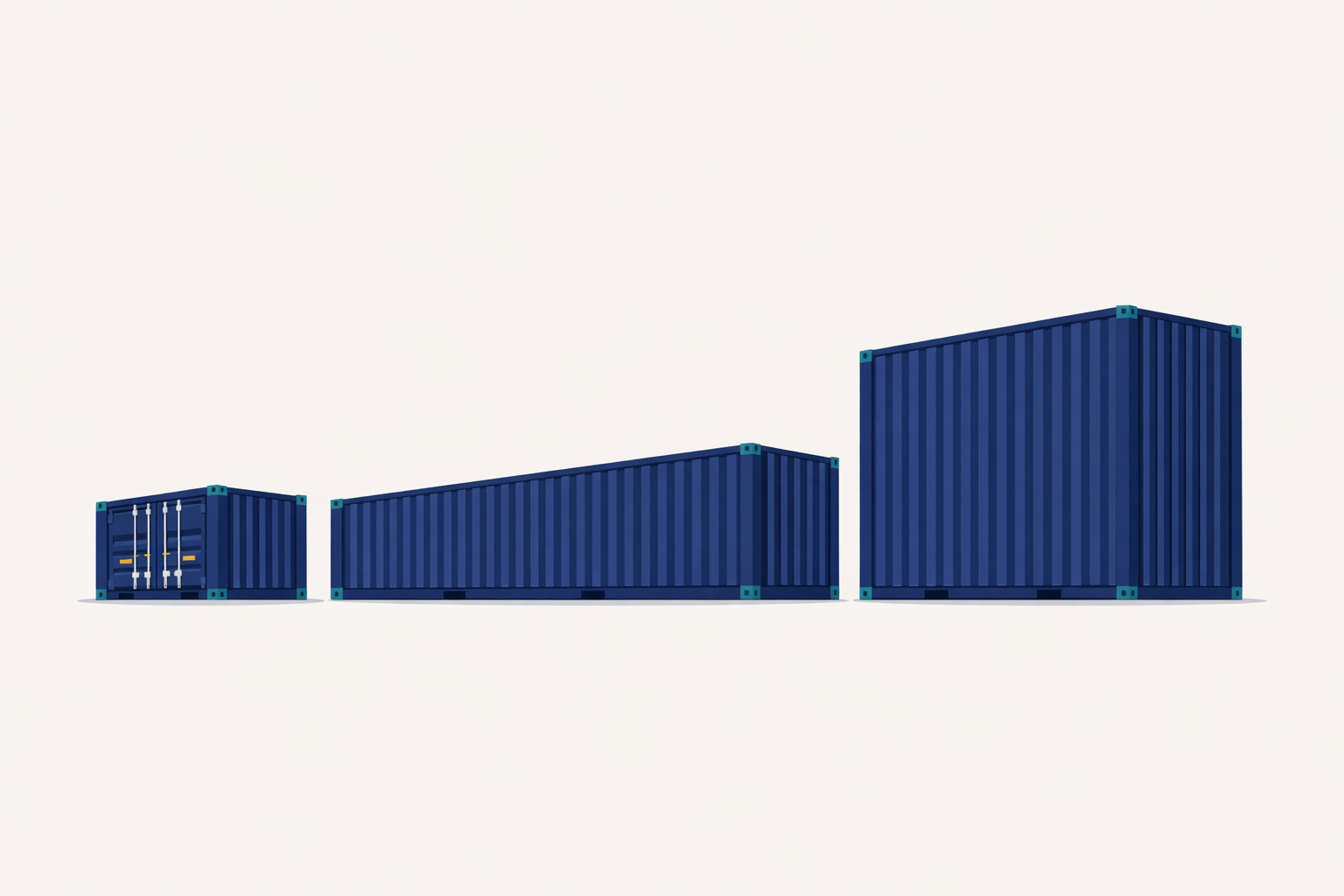
Once you decide to ship by ocean, the next question is "which container, and how much fits?" The short answer: a standard 20ft holds about 33 CBM with a 28,200 kg payload limit, a 40ft about 67 CBM at 28,800 kg, and a 40ft high cube about 76 CBM at 28,620 kg.
Knowing those figures is not the same as sizing a shipment. What decides the number of containers is which limit you reach first, volume or weight.
What are the dimensions of a 20ft and 40ft container?
| 20ft | 40ft | 40ft High Cube | 45ft High Cube | |
|---|---|---|---|---|
| External length | 6,058mm | 12,192mm | 12,192mm | 13,716mm |
| External width | 2,438mm | 2,438mm | 2,438mm | 2,438mm |
| External height | 2,591mm | 2,591mm | 2,896mm | 2,896mm |
| Internal length | 5,896mm | 12,032mm | 12,032mm | 13,556mm |
| Internal width | 2,350mm | 2,350mm | 2,350mm | 2,352mm |
| Internal height | 2,393mm | 2,393mm | 2,697mm | 2,698mm |
| Door opening width | 2,350mm | 2,340mm | 2,340mm | 2,340mm |
| Door opening height | 2,274mm | 2,274mm | 2,577mm | 2,585mm |
| Internal volume | 33 m³ | 67 m³ | 76 m³ | 85 m³ |
| Tare weight | 2,280kg | 3,700kg | 3,880kg | 4,900kg |
| Max payload | 28,200kg | 28,800kg | 28,620kg | 27,600kg |
| Max gross weight | 30,480kg | 32,500kg | 32,500kg | 32,500kg |
External dimensions and the height classes come from ISO 668:2020. Width is 2,438mm across every size, and there are only two heights: 2,591mm standard and 2,896mm high cube. Internal dimensions, tare and payload figures are from Maersk's published equipment specifications.
Separate what is standardised from what is not. The external dimensions and maximum gross weight set by ISO 668 are the same whichever carrier you book. Internal dimensions, tare weight and payload vary by manufacturer, build year and carrier, sometimes by several hundred kilograms. On weight-critical cargo, check the specification sheet of the carrier you are actually booked with.
How many CBM fit in a 20ft or 40ft container?
A 20ft container holds about 33 CBM, a 40ft about 67 CBM, and a 40ft high cube about 76 CBM. Those are theoretical maximums calculated from internal length, width and height.
Do not plan against them directly. Because of loading access and irregular box sizes, about 85 to 90 percent is what actually loads, so a 20ft takes roughly 25 to 30 CBM and a 40ft roughly 57 to 60 CBM. How to calculate your cargo's CBM in the first place is covered in CBM and volumetric weight.
What is the difference between tare, payload and gross weight?
Three separate weights, and carriers and customs look at different ones.
- Tare weight: the empty container itself, about 2,280 kg for a 20ft and 3,700 kg for a 40ft.
- Max payload: the cargo limit on its own, about 28,200 kg for a 20ft.
- Max gross weight: cargo plus container, fixed by ISO 668 at 30,480 kg for a 20ft and 32,500 kg for the 40ft sizes.
Tare plus payload equals gross. The gross weight declared on shipping documents includes the container, not just the cargo, which is a common source of confusion on the VGM declaration.
The limit people miss is inland road transport. A container may be rated for 28 tonnes and still be capped well below that by axle-load rules on the road leg. For heavy cargo the road limit, not the ocean limit, often sets the ceiling.
What floor area does a container have?
Floor area calculated from internal length and width, useful for storage or conversion planning.
| Size | Floor area |
|---|---|
| 20ft | ~13.9 m² |
| 40ft | ~28.3 m² |
| 40ft High Cube | ~28.3 m² |
| 45ft High Cube | ~31.9 m² |
A high cube is taller but has the same floor area as the standard container of the same length. For single-layer floor-loaded cargo, a high cube gains you nothing.
20ft, 40ft, or high cube: which should you choose?
- 20ft: best for heavy but compact cargo, or small loads.
- 40ft: more than double the volume of a 20ft, but a similar maximum payload. So the lighter and bulkier your cargo, the better a 40ft fits.
- 40ft High Cube: same length and width as a 40ft, about 30cm taller internally. It gives more volume for light, bulky cargo such as apparel or finished electronics.
The key question is whether volume or weight hits its limit first. Heavy cargo tops out on weight; light cargo tops out on volume. If you cannot fill a container, compare LCL and FCL and pick the cheaper option.
What special container types are available?
Non-standard cargo cannot go in a dry container. These special containers match the cargo's characteristics.
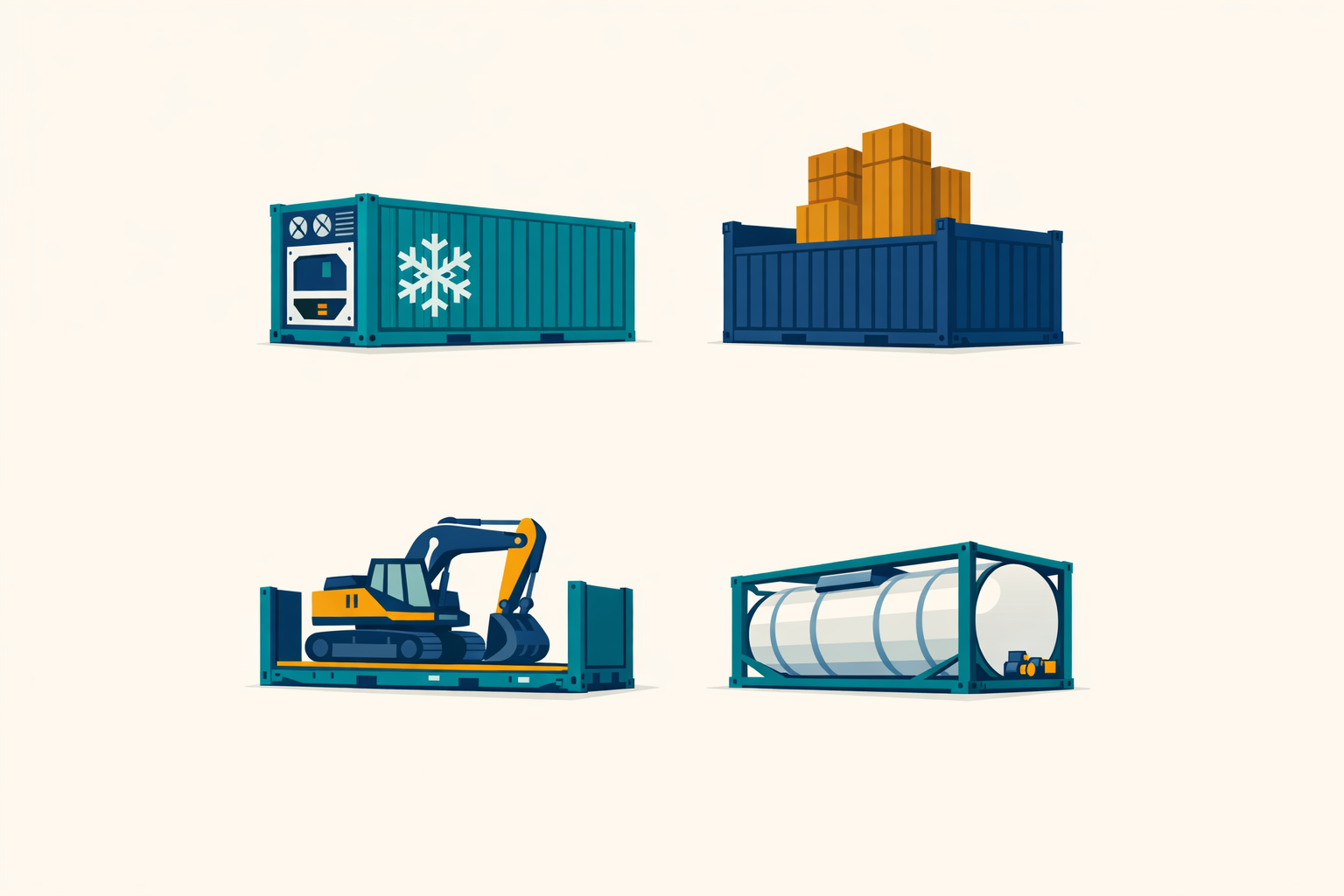
- Reefer (refrigerated): temperature-controlled for food, pharmaceuticals, and other sensitive cargo. Available in 20ft and 40ft, with less internal volume because of the cooling unit.
- Open Top: an open roof for crane loading from above, used for over-height cargo like machinery.
- Flat Rack: no roof or side walls, for over-width or heavy cargo such as equipment and large materials.
- Tank: a tank structure for liquids, chemicals, and edible oils.
Ventilated containers and other variants are used depending on the cargo.
What should you check before booking?
- Calculate total CBM and total weight first: whichever hits its limit first decides the container size and count.
- Plan for 85 to 90 percent utilisation: you rarely fill the theoretical volume, so leave room.
- Check the door opening: cargo that fits inside can still fail to pass the doors. The opening is more than 100mm lower than the internal height.
- Check road weight limits: inland axle-load rules may cap what you can actually load.
- Consider LCL for small loads: if you cannot fill a container, consolidation is cheaper.
Knowing container dimensions and CBM lets you size your shipment before you even request a quote.
External dimensions and maximum gross weights in this guide follow ISO 668:2020; internal dimensions, tare weights and payload limits follow Maersk's published equipment specifications. The latter vary by carrier, manufacturer and build year, so confirm the specification sheet of your booked carrier for weight-critical cargo.
Frequently asked questions
What is the difference between a 20ft and a 40ft container?
A 40ft has more than double the internal volume of a 20ft (about 67 CBM versus 33 CBM), but a similar maximum payload: 28,800 kg against 28,200 kg. So a 40ft suits light, bulky cargo, while heavy cargo can hit the weight limit even in a 20ft.
How is a high cube (HC) container different from a standard 40ft?
It has the same length and width as a 40ft but is about 300mm taller inside, 2,697mm against 2,393mm. That raises internal volume to about 76 CBM, which helps with light, bulky cargo. The floor area is identical, so single-layer floor-loaded cargo gains nothing from a high cube.
How many CBM fit in one container?
In theory about 33 CBM for a 20ft, 67 CBM for a 40ft and 76 CBM for a 40ft high cube. In practice, allowing for loading access and cargo shape, you fill roughly 85 to 90 percent, so about 25 to 30 CBM in a 20ft and 57 to 60 CBM in a 40ft.
What is the tare weight of a shipping container?
Tare weight is the empty container itself: about 2,280 kg for a 20ft, 3,700 kg for a 40ft and 3,880 kg for a 40ft high cube. Adding the payload gives the maximum gross weight, fixed by ISO 668 at 30,480 kg for a 20ft and 32,500 kg for the 40ft sizes. Tare varies by manufacturer and carrier, so read the CSC plate on the container you are assigned.
What is the floor area of a 40ft container?
About 28.3 square metres, calculated from the internal length and width. A 20ft is about 13.9 square metres and a 45ft high cube about 31.9 square metres. High cubes have the same floor area as the standard container of the same length because only the height differs.
What are the special container types?
Reefers (refrigerated) for temperature-sensitive cargo, open tops for over-height cargo, flat racks for over-width or heavy cargo, and tanks for liquids and chemicals. General cargo uses standard dry containers.
Which container should I choose?
Calculate total CBM and total weight to see which hits its limit first. Light and bulky cargo suits a 40ft or high cube; heavy cargo suits a 20ft. If you cannot fill a container, LCL consolidation may be cheaper.


