
What Is a Freight Forwarder, and How to Choose a Good One

On your first import or export, the first thing that trips you up is "do I book directly with the carrier, or do I need a forwarder?" The short answer is that most shippers go through a forwarder. A carrier only moves the box from port to port; a forwarder ties together the tangled steps before and after that.
This guide is written to help someone handling international logistics for the first time understand what a forwarder does and choose one they can trust, especially for trade to or from Korea and the wider APAC region.
What is a freight forwarder
A freight forwarder does not own ships, aircraft or trucks itself. It arranges and connects them to handle the whole transport of import and export cargo on your behalf. It is a registered operator under customs law, and it issues its own bill of lading (House B/L) or air waybill (House AWB) to the shipper.
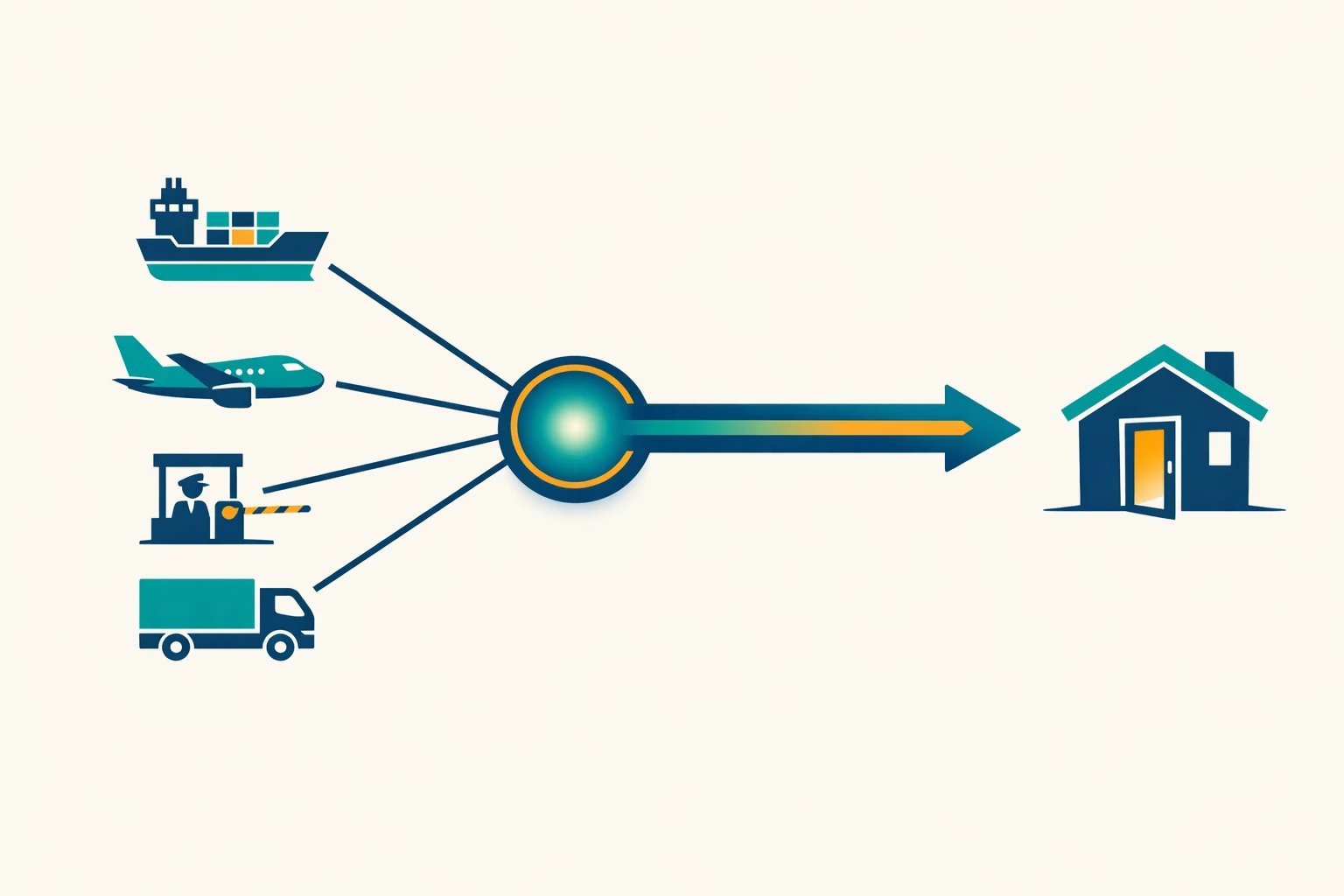
Put simply, it is a coordinator that bundles the separate pieces, the carrier, the airline, customs and inland transport, into a single point of contact.
What a forwarder actually does
Carriers and airlines are only responsible port to port, or airport to airport. A forwarder connects everything before and after that, all the way to door delivery.
- Arranging transport: comparing routes, carriers and schedules to book the best leg
- Consolidation: combining LCL small shipments into one container
- Documents: issuing House B/L and AWB, cargo manifests and other transport papers
- Customs coordination: linking with the customs broker and declaration (one-stop when clearance is handled together)
- Inland transport: trucking (drayage) from the port or airport to the final destination
- Tracking and problem-solving: handling delays, incidents and claims
Carrier vs forwarder: what is the difference
| Aspect | Carrier / airline | Forwarder |
|---|---|---|
| Transport assets | Owns them (ships, aircraft) | None, arranges instead |
| Scope of responsibility | Port to port / airport to airport | Door to door |
| Small shipments (LCL) | Limited handling | Handled by consolidation |
| Customs, inland, documents | Separate | Can be handled together |
| Shipper contact | Mostly large shippers | Close support down to small shippers |
House B/L and Master B/L
Once a forwarder is involved, the bill of lading (B/L) comes in two kinds. They are easy to confuse, so keep them straight.
- Master B/L (MB/L): issued by the carrier to the forwarder; the transport contract between carrier and forwarder
- House B/L (HB/L): issued by the forwarder to the actual shipper; the transport contract between forwarder and shipper
What the actual shipper receives is the House B/L. For letter of credit (L/C) transactions and the like, confirm in advance which B/L is required so there is no document problem.
Five criteria for choosing a good forwarder
- Customs experience and coordination: whether it has deep experience with declarations, tariff classification and clearing customs trouble. When clearance is handled together, hand-offs shrink.
- Transparent billing: whether it calculates weight and volume (CBM) accurately and presents surcharges line by line. Confirm the all-in total.
- Real-time responsiveness: whether it feeds back on the ground quickly by email, chat or phone. When delays or incidents happen, response speed is risk management.
- Network reach: whether it has a local partner (or its own branch) in the destination country and route. Local capability drives lead time and incident handling.
- Cargo care and liability: whether it checks packing condition and is clear about liability and insurance (cargo insurance) for damage or loss.
Putting these five criteria to Portlogics
These criteria are also exactly how Portlogics works. Portlogics runs its own branches across five APAC countries with no middle broker, and handles everything from quote to customs, tracking and settlement in one control tower.
| Criterion | How Portlogics does it |
|---|---|
| Customs experience and coordination | Runs transport and customs on one line rather than handing off to a separate broker. Links HS classification, tariffs and Incoterms settlement on an AEO basis. |
| Transparent billing | Checks ocean and air rates in real time so you confirm expected cost up front, and presents surcharges line by line. |
| Real-time responsiveness | Tracks from booking to final delivery with its own transport management system (TOMS), and flags demurrage and detention before the cost arises. |
| Network reach | Keeps its own branches in five APAC countries. An in-house operation responds, rather than outsourcing to a local partner. |
| Cargo care and liability | Runs the core lanes directly without subcontracting, so liability does not scatter even when an incident or claim occurs. |
The more hand-off points, the more delays and document errors pile up. Binding transport, customs, tracking and settlement into one flow is how Portlogics meets all five criteria at once.
Requesting a quote: what to prepare and a checklist
Once you have chosen a company, the next step is getting an accurate quote. Organizing the information below in advance lets the forwarder produce an accurate rate right away, and makes it easy to compare several companies on the same basis.
Before you request a quote
- Cargo details: item (an HS code if possible), quantity and packing form, gross weight and volume (CBM)
- Transport legs: origin and destination (port, airport or door address), desired departure and arrival timing
- Mode: FCL, LCL or air, and whether it is dangerous goods, refrigerated or special cargo
- Trade terms: Incoterms rule (FOB, CIF and so on). This is where how far your responsibility runs is set
- Customs documents: commercial invoice and packing list, needed if clearance is included
A checklist for comparing the quotes you receive
- Whether it is an all-in total, or a figure with destination surcharges left out
- Whether surcharges (THC, CFS, D/O and so on) are itemized
- Whether the exchange-rate basis and quote validity period are stated
- Whether customs and inland transport (drayage) are included or separate
With just this information, you can get real-time ocean and air rates from the route and cargo details alone. When the terms are unclear or you are unsure which mode is better, we can help work out the method that fits the cargo and the route.
This guide is general information. Actual transport and customs requirements vary by item, route and timing, so confirm through a quote and consultation.
Interactive tool
Real-time ocean and air rate quote
Enter just the route and cargo details to check LCL, FCL and air rates in real time and see the expected cost at once. Surcharges are presented transparently, line by line.
Frequently asked questions
How is a forwarder different from a carrier?
Carriers and airlines own the transport and are only responsible port to port (or airport to airport). A forwarder has no transport of its own; instead it arranges them and manages door-to-door delivery including customs, inland transport and documents.
Can I ship small cargo through a forwarder too?
Yes. A forwarder consolidates small shipments from several shippers into one container (LCL), so it is especially useful for small imports and exports that cannot fill a container.
How do I choose a good forwarder?
Check five things: customs experience, transparent billing (weight, volume and surcharges), real-time responsiveness, destination network, and cargo care and liability. A company that handles clearance too reduces hand-offs.
What is the House B/L that a forwarder issues?
It is the bill of lading a forwarder issues to the shipper. It is distinct from the Master B/L that the carrier issues to the forwarder, and it represents the transport contract between the actual shipper and the forwarder.
Does using a forwarder mean customs clearance is handled too?
Clearance is the domain of the customs broker and declaration, but when a forwarder offers clearance together, transport through customs can be handled one-stop from a single point of contact.
What do I need to prepare to request a quote from a forwarder?
Prepare the item (an HS code if possible), quantity and packing, gross weight and volume (CBM), origin and destination, mode (FCL, LCL or air), the Incoterms rule, and, if you include clearance, the commercial invoice and packing list. With this information you can compare several companies on the same basis.


